
Build my plan

Staying with a plan is hard.
That’s the point.

Week three arrives. The excitement is gone. There are more urgent things. Most people stop here. Steadily makes the plan visible, the next step obvious, and abandonment a deliberate choice — not a quiet drift.

Make my plan → Why plans break down
Free · No credit card · No signup needed to try

The people who finish aren’t more disciplined. They’ve made quitting harder.

Research on precommitment shows that sustained effort comes from structure, not willpower.

The Research

Roy Baumeister’s work on ego depletion shows that willpower is a depleting resource — not a character trait the disciplined possess in unlimited supply. Walter Mischel’s longitudinal research found that the children who successfully delayed gratification weren’t fighting harder — they were using strategies to change the environment. Richard Thaler’s work on commitment devices shows that pre-binding decisions around important goals dramatically outperforms relying on motivation in the moment.

1

Present bias returns

The distant goal that felt urgent at the start feels abstract again. The present always offers something more immediate.

2

Progress becomes invisible

In the middle of a long project, it’s hard to see how far you’ve come. Without progress markers, continuing feels futile.

3

The plan loses its stakes

Without a visible commitment, renegotiating is easy and silent. You don’t decide to quit — you just stop.
Steadily makes abandonment a visible choice

You can drop anything from the plan. But you have to choose to — it doesn’t just quietly disappear.

Your commitment is a dated plan, not a vague intention

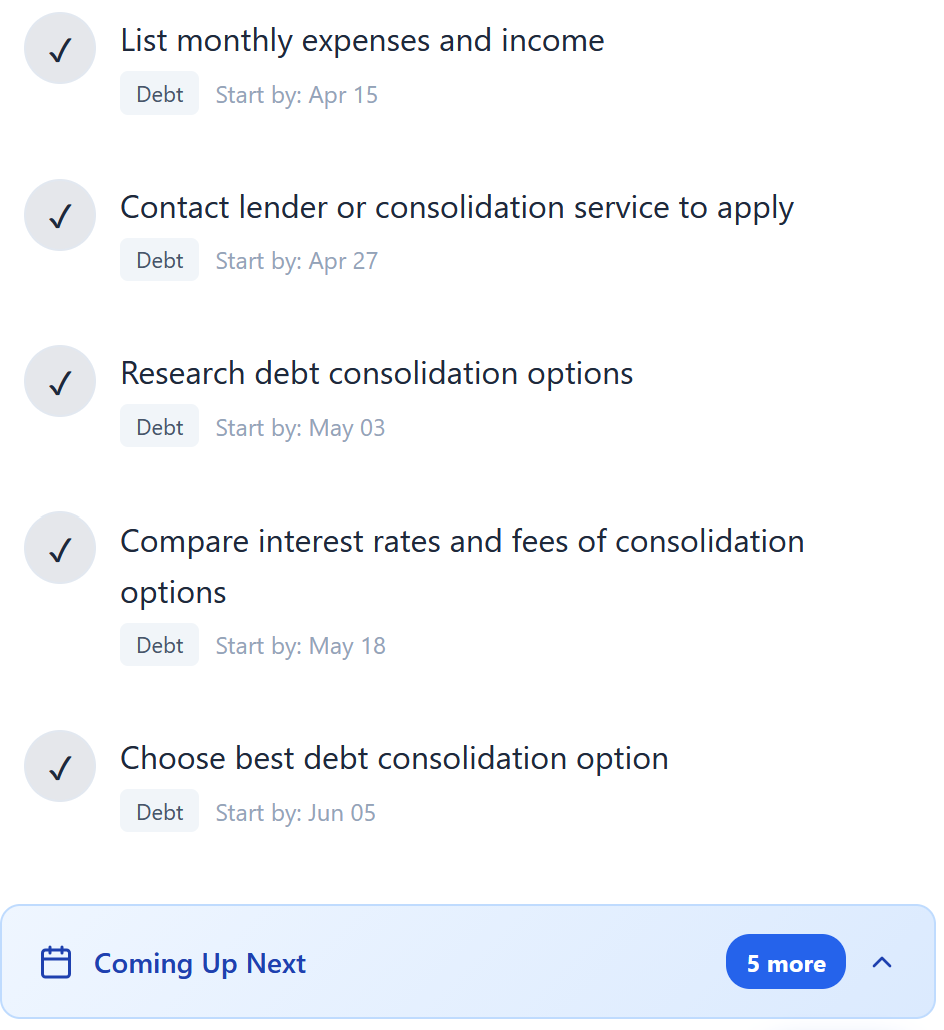
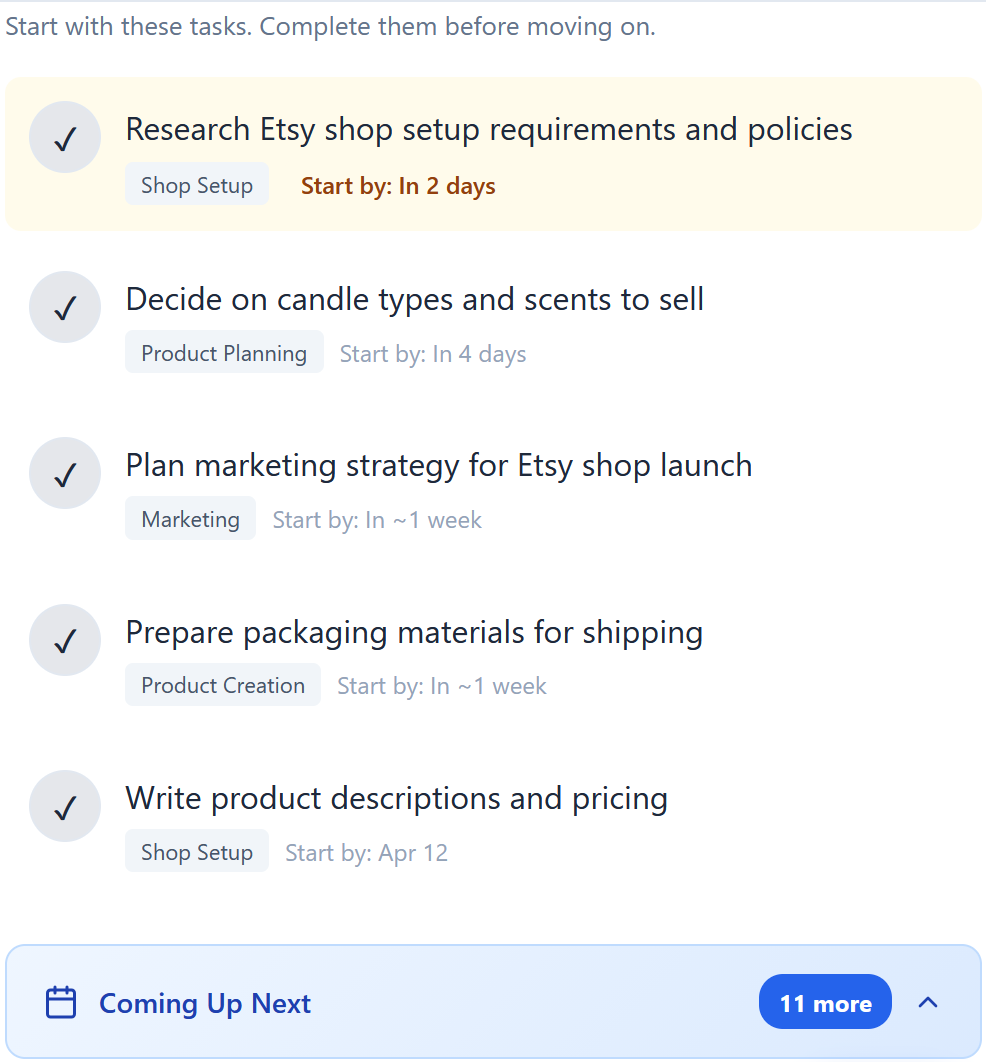
When you put a goal in Steadily, it becomes a sequence of dated steps with start-by dates. When the boring middle arrives and everything else feels more urgent, you can open the app and see exactly what you committed to and what comes next.

Dropping something requires actively deleting or rescheduling it. That friction — small as it is — is often enough to make you reschedule rather than abandon.

You’re not running on motivation. You’re running on the structure you built before motivation left.

A long-term financial goal broken into steps with start-by dates visible in Steadily

What long-term goal keeps slipping through the cracks?

Make it a real plan →

The plan doesn’t change because it got boring

It changes when circumstances require it. And when it does, that’s a deliberate decision — not a drift.

A project with sequenced tasks and start-by dates that remains visible week after week in Steadily

Not everything goes in. But what does, you don’t touch.

You don’t put every task in Steadily. You put the things that have dates and that you can’t afford to slip. Those are the commitments that define whether your long-term goals happen or don’t.

When you know you can’t mess with your Steadily time if you want to hit your goals, the weekly negotiation changes. You protect those slots. You move things around them, not them around other things.

“You have to enjoy the torture. Not because it’s fun — but because you’ve decided that the hard middle is what doing the work looks like. It’s not a sign something is wrong.”
— On staying with long-term commitments

Build a plan you can’t quietly quit.

Describe your goal. Steadily breaks it into steps with real dates so when motivation leaves — and it will — the structure holds.

Make my plan free →